AI and Photography
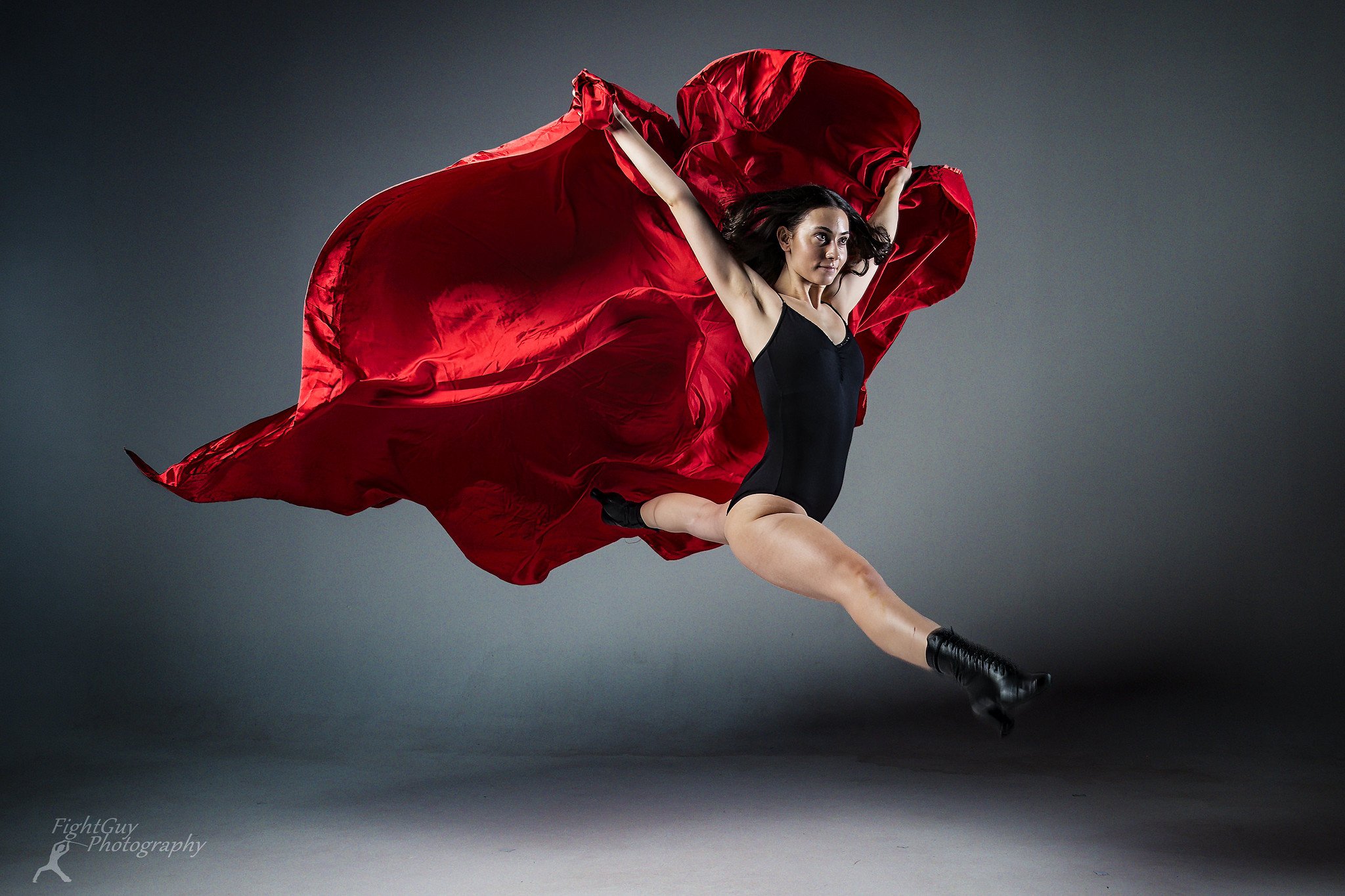
A photo of real life ballet dancer, Kayla Walsh. A fantastic dancer who spent years working on her skills. Taken by a real camera, held by a real photographer, in a real studio.
Here we go…… ::deep breath::
Every few months I get asked what I think about AI in photography.
The answer is not a simple one-to-one answer, because the term "AI" now covers everything from selecting a subject in Photoshop to generating an entirely fictional person who never existed. We really have to start with “Well, let’s define what we’re talking about….”
And to start, I don't think every use of AI is the same.
The Tools I Use
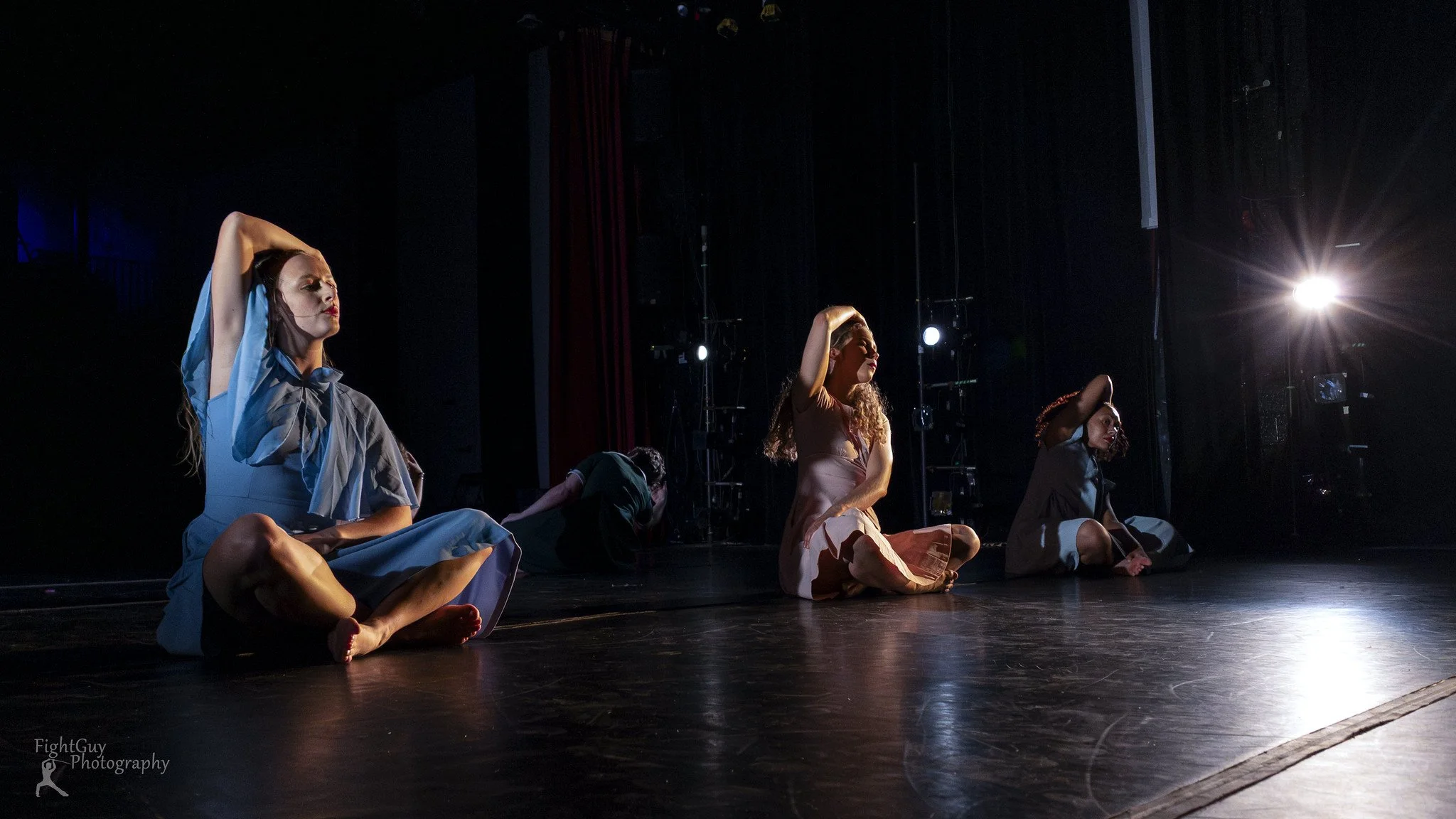
Dancers of the Effervescence Collective, performing live at Dance Place DC
If we’re talking big picture, expansive use of the term, “AI” is already worked into most of our programs. AI is a complex series of parameters that use established patterns to seemingly make decisions.
When I remove a distracting object from a background, AI is involved.
When Photoshop expands the edge of a canvas, AI is involved.
When Photoshop identifies a subject, separates the background, sharpens an image, or helps isolate a mask, AI is involved.
I use those tools. Not because I'm trying to avoid the work, but because I'm trying to maximize my time, and spend it on the things that really need my attention. Hand selecting an object by tracing it with the pen tool in Photoshop takes time. Doing it well, with a complicated object, takes a lot of time. Time that could be spent elsewhere.
As a photographer running a business, my job isn't just taking pictures.
It's:
Planning shoots
Communicating with clients
Traveling
Photographing
Editing
Delivering galleries
Managing a website
Writing blog posts (ha)
Creating behind-the-scenes content
Marketing
Bookkeeping
Researching new tools and gear
Practicing new techniques
If a tool can save me ten minutes removing distractions from a background, that's ten minutes I can spend creating something new.
The goal isn't to avoid effort. The goal is to focus effort and energy where it matters most
The Decisions Still Matter
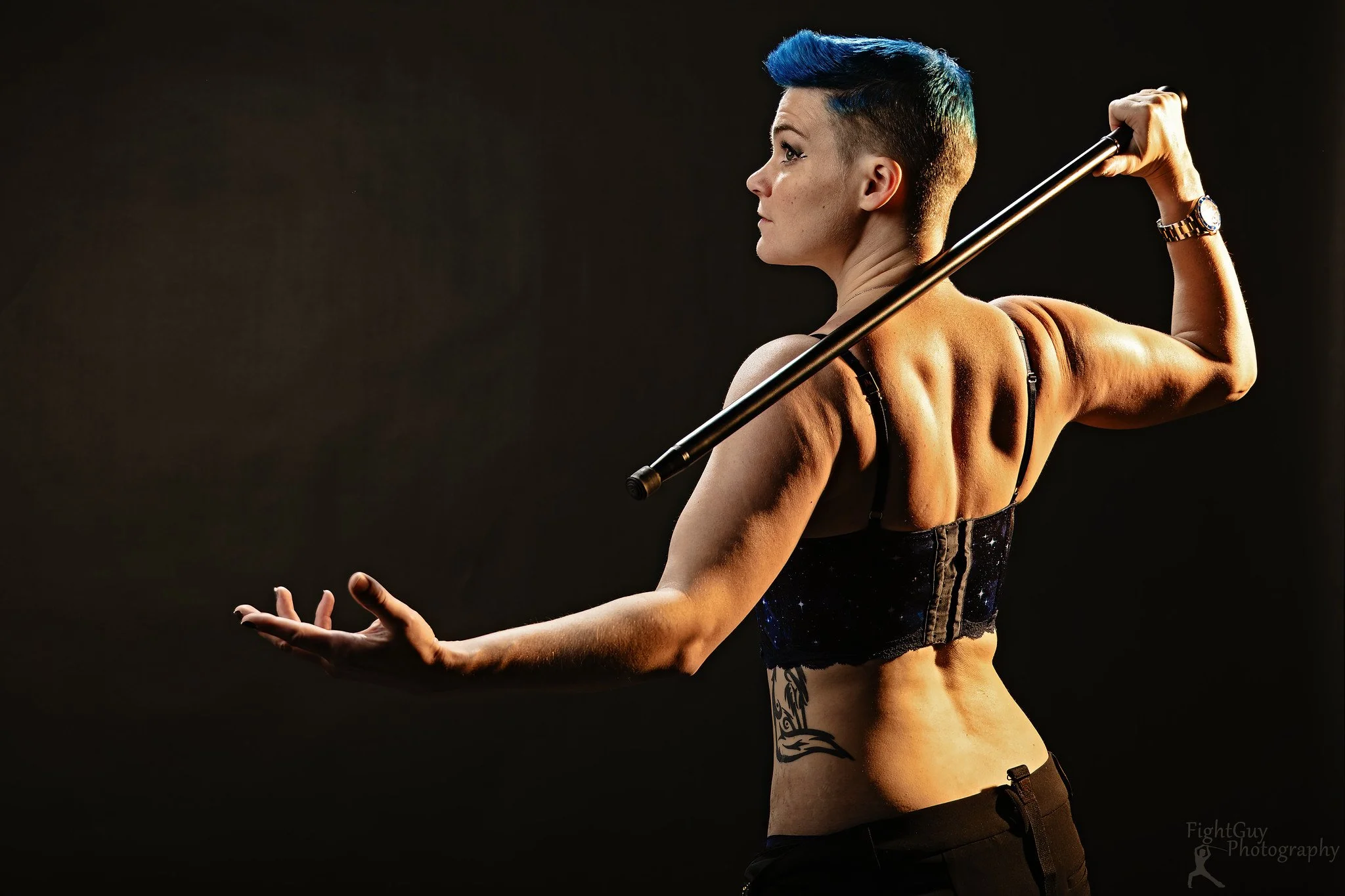
First time model Lindsay, who worked hard to develop her back muscles, who made deeply personal choices about her tattoo and hair, who put trust in us to create cool images.
There are parts of my workflow I deliberately refuse to hand over. Culling, for example. Culling is the process of reviewing raw images, to select the best of the best, separate out different looks, and eliminate images that just don’t work.
Lightroom now offers tools that can help identify "best" images from a session. Many photographers find those features useful.
I don't use them. Not because they're evil. Not because they're cheating. Because selecting photographs is one of the core skills I've spent years developing. I've worked hard to train my eye.
After years of photographing theater, stage combat, conventions, portraits, and events, I've developed the ability to look at an image for a fraction of a second and know whether it's a keeper.
It's a skill I'm honestly quite proud of. It's also one of the skills clients hire me for, instead of someone else. If I wouldn't hand that decision to an assistant, I'm not particularly interested in handing it to an algorithm.
For me, that's still a core part of my craft.
The Difference Between Help and Creation

Model and Actress Anna Philips-Brown, a beautiful woman who worked with us to create some amazing photos. She’s holding a sword made by a friend of ours at Baltimore Knife And Sword.
This is where I think many discussions about AI go off the rails.
People often talk about AI as though it's a binary decision. We do AI yes, or we do AI no. I don't see it that way.
Using software to speed up masking a subject isn't the same thing as generating an entire image. Using content-aware fill to remove a trash can from the background isn't the same thing as inventing a castle, a dragon, and a person who never existed. Those are fundamentally different activities.
One is assisting a photograph.The other is creating a new image. They aren't the same thing.
It’s the difference between using a KitchenAid to mix your cake batter, and buying a finished cake at the bakery (and claiming you made it).
The Ethics of it all
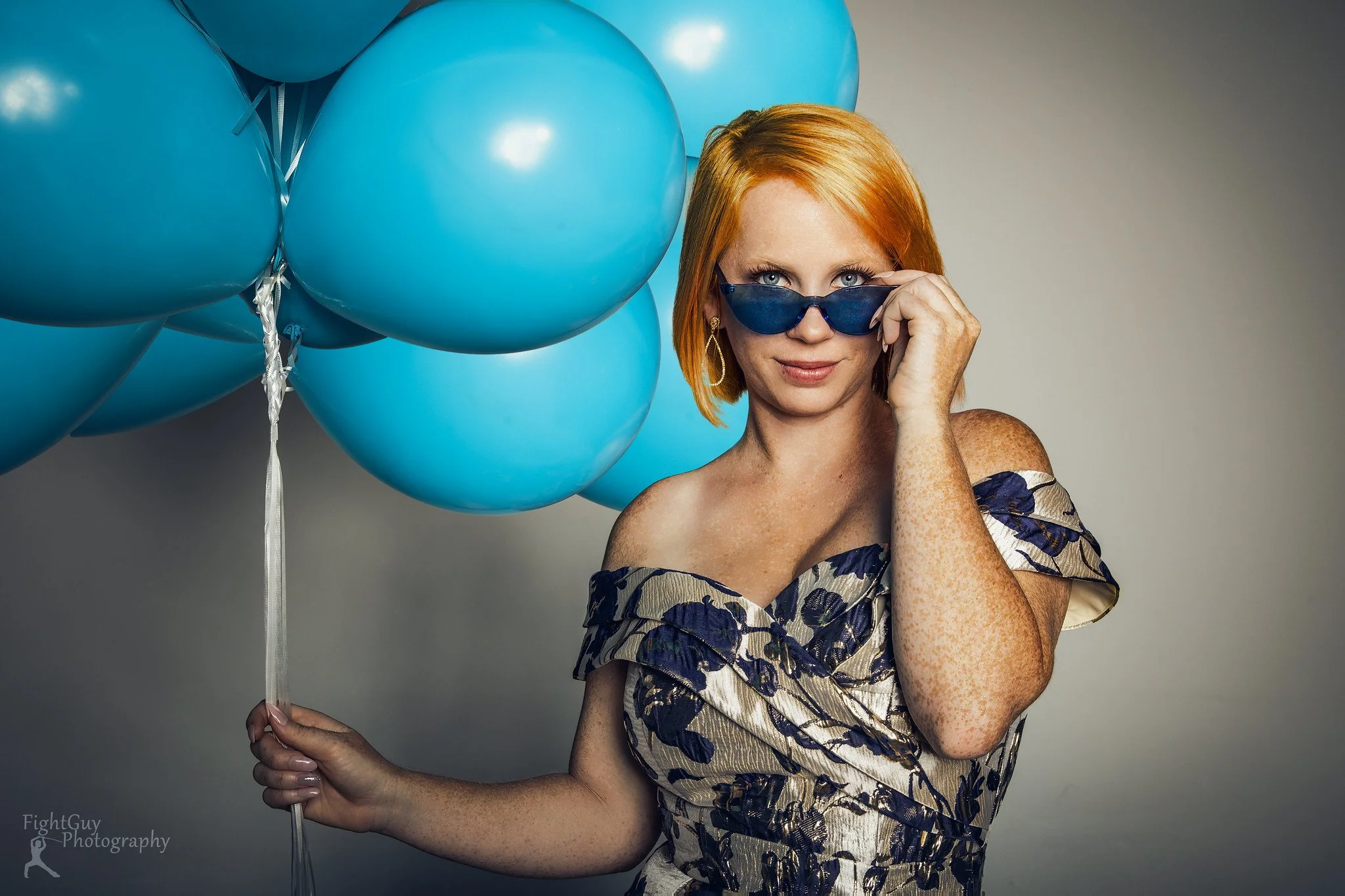
A dear friend of ours, Nikisha, poses in studio with one of her favorite dresses, with blue sunglasses from Amazon, and a bundle of balloons we bought at Party City and carried to the studio in high winds. They didn’t actually give us a full dozen, so I had to replicated a few extra in Photoshop.
My biggest concern isn't AI-generated art. It’s the misrepresentation of it all.
If someone creates an image with AI and says: "This is an AI-generated image I prompted."
Fine. That's honest. People can appreciate the image for what it is. It’s not how I want to make things, but I can understand what is happening there.
The problem begins when someone presents that image as a photograph.
When they imply:
"I traveled here."
"I worked with this model."
"I crafted this light."
"I captured this moment."
“I have excellent editing skills.”
When none of those things actually happened. At that point the issue isn't the technology in play. It's a question of authenticity.
Photography has always carried an implied relationship with reality. Even heavily edited photographs generally begin with a real person, in a real place, at a real moment in time. Artistic choices are made there to suit the nature of the work being created after that. Photos have been edited in one way or another since we started making them. Editing is not the question here.
When that initial connection to a real moment is completely removed, and the audience is encouraged to believe it's still there, that's where I get uncomfortable.
Real Collaboration Still Matters
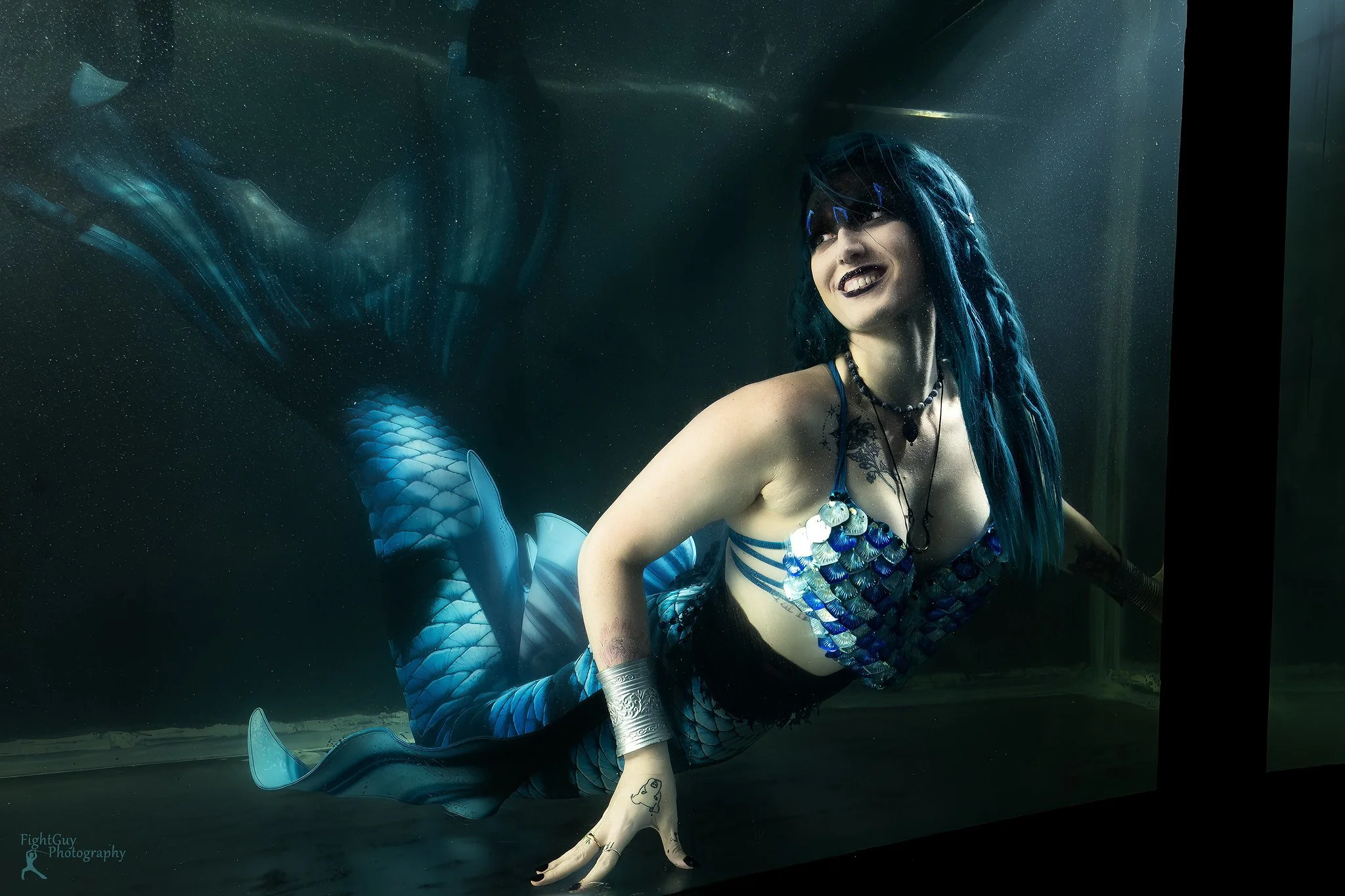
The beautiful mermaid performer, The Nordic Siren, poses in the Appalachian Mermaid Society’s thousand gallon, hand made mermaid tank. She’s spent years working her posing and swimming skills, and developing her personal mermaid style, including makeup, jewelry, outfit, and color scheme.
The reason I became a photographer was never because I wanted to manufacture images. It was because I wanted to create and preserve experiences.
A cosplay shoot
A headshot session
A fantasy portrait
A beautiful performance
Those things involve real people bringing their creativity, energy, skill, and personality into the process. That's the part I care about. New tools can help me work faster. It can help me remove distractions. It can help me spend less time wrestling with little elements of an image.
But it can't replace the collaboration that happens when artists, performers, clients, and photographers create something together.
That's the part of photography I would never want automated.
And it's the reason that, for all the advances in technology, I still find the most interesting and important thing in my work is the people on either side of the camera.
(All of the details we included in the photo captions - the who, what, how - are included to illustrate how deeply personal, specific, and real these sessions are. Real people working to make real images)